
 English
 Spanish
 French
 German
 Italian
 Chinese (Simplified)
 Japanese
 Korean
 Arabic
 Portuguese



 Send Inquiry
304 Stainless Steel Sheet
Price 250 INR/
304 Stainless Steel Sheet Specification
- Hardness
- HRB 92 (annealed)
- Size
- Custom & standard sizes (8 x 4 ft, 10 x 4 ft, etc.)
- Product Form
- Sheet
- Heat Resistance
- Yes
- Coating Type
- Uncoated / PVC-Coated on request
- Tensile Strength
- 515-750 MPa Megapascals (MPa )
- Corrosion Resistant
- Yes, Excellent resistance to corrosion and oxidation
- Material Composition %
- Cr 18-20, Ni 8-10.5, C 0.08
- Recyclable
- Yes
- Product Name
- 304 Stainless Steel Sheet
- Steel Type
- Stainless Steel
- Steel Product Type
- Sheet
- Grade
- 304
- Thickness
- 0.3 mm - 50 mm Millimeter (mm)
- Steel Standard
- ASTM A240 / AISI 304
- Surface
- 2B, BA, No.1, No.4, Mirror, Matt
- Composition
- Cr 18-20%, Ni 8-10.5%, C 0.08%, Mn 2.0%, Si 1.0%, P 0.045%, S 0.03%, Fe balance
- Application
- Used in construction, manufacturing, kitchen equipment, food processing, chemical, oil and gas, and architectural sectors
- Dimension (L*W*H)
- As required (standard sizes: 8ft x 4ft, 10ft x 4ft, customizable) Foot (ft)
- Color
- Silver / Natural
- Material Grade
- SS 304
- Finish Type
- 2B, BA, No.4, Mirror, customized finishes
- Usage
- Structural, fabrication, kitchenware, chemical processing equipment, architectural
- Machinability
- Good
- Stock Availability
- Readily Available
- Modulus of Elasticity
- 193 GPa
- Magnetic Properties
- Non-magnetic in annealed condition
- Maximum Operating Temperature
- 870AAC (continuous), 925AAC (intermittent)
- Weldability
- Excellent
304 Stainless Steel Sheet Trade Information
- Main Export Market(s)
- South America, Africa, North America, Middle East, Central America, Eastern Europe, Asia, Western Europe, Australia
- Main Domestic Market
- All India
About 304 Stainless Steel Sheet
We "PRAGATI METAL CORPORATION" are the leadingtrader, wholesaler and exporter of a wide range of 304 Stainless Steel Sheets, 316 Stainless Steel Sheets, 409 Stainless Steel Sheets, 441 Stainless Steel Sheets, etc. Our provided products are manufactured by taking only top grade components at our vendor ultra-modern processing unit. These products are highly demanded by the customers for their accurate dimension, best quality, fine finishing, light weight and longer service life. Apart from this, these offered products are used in various fields.Exceptional Durability and Versatility
304 Stainless Steel Sheet stands out for its strength, formability, and ability to resist corrosion and oxidation, even in demanding environments. It is available in thicknesses from 0.3 mm to 50 mm and can be supplied in standard sizes such as 8ft x 4ft or 10ft x 4ft, with customizable dimensions upon request. This adaptability makes it a suitable choice for diverse applications in construction, manufacturing, and more.
Applications Across Multiple Industries
This stainless steel sheet finds wide usage in construction, kitchen equipment, food processing, chemical plants, oil and gas, and architectural projects. Its excellent weldability, non-magnetic properties in the annealed condition, and attractive finish options (2B, BA, No.4, Mirror, Matt) make it especially favored for both functional and aesthetic purposes.
High-Temperature Resistance & Easy Maintenance
304 Stainless Steel Sheet maintains its structural integrity at elevated temperatures, allowing continuous operation up to 870C. The material also offers ease of maintenance since its smooth surface resists staining and allows for hygienic cleaning, making it ideal for food industry and healthcare environments.
FAQs of 304 Stainless Steel Sheet:
Q: How is the 304 Stainless Steel Sheet typically fabricated or processed?
A: The 304 Stainless Steel Sheet can be readily cut, welded, bent, and formed using standard fabrication methods. Its excellent weldability allows it to be joined by TIG, MIG, spot, and arc welding processes without compromising corrosion resistance.Q: What benefits does using 304 Stainless Steel Sheet offer in construction and manufacturing?
A: The sheets high strength, corrosion resistance, and ease of fabrication make it a preferred material in construction and manufacturing. It provides longevity, reduces maintenance costs, and ensures safety and reliability in structural applications.Q: When should I choose a 304 grade stainless steel sheet over other grades?
A: 304 stainless steel is ideal when you need a cost-effective, corrosion-resistant material with good formability and weldability for use in food processing, architectural features, or chemical equipment. For environments with higher corrosive exposure (like marine applications), grades such as 316 might be more suitable.Q: Where can 304 Stainless Steel Sheets be used most effectively?
A: These sheets perform exceptionally well in environments exposed to moisture, chemicals, and heat. Typical applications include kitchen equipment, food processing plants, building facades, chemical processing equipment, and oil and gas infrastructure.Q: What finishes are available for 304 Stainless Steel Sheet and why choose different ones?
A: Finishes include 2B, BA, No.4, Mirror, and Matt, among others. A smooth 2B finish is ideal for general use, Mirror finish provides a reflective appearance for decorative applications, No.4 offers a brushed look suitable for kitchenware, and Matt gives a subtle, non-reflective surface.Q: How does the non-magnetic property benefit certain applications?
A: In its annealed condition, 304 Stainless Steel Sheet is non-magnetic, which is particularly advantageous in sensitive electronic, medical, or laboratory environments where magnetism can affect instruments or processes.Q: Is 304 Stainless Steel Sheet recyclable and environmentally friendly?
A: Yes, 304 Stainless Steel Sheet is 100% recyclable. Its production and use support sustainable practices by reducing raw material consumption and minimizing environmental impact through recycling.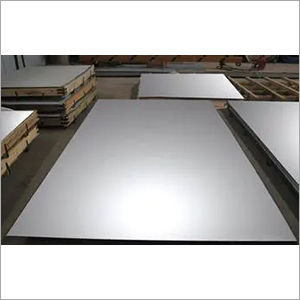

Price:
- 50
- 100
- 200
- 250
- 500
- 1000+

More Products in Stainless Steel Sheet Category
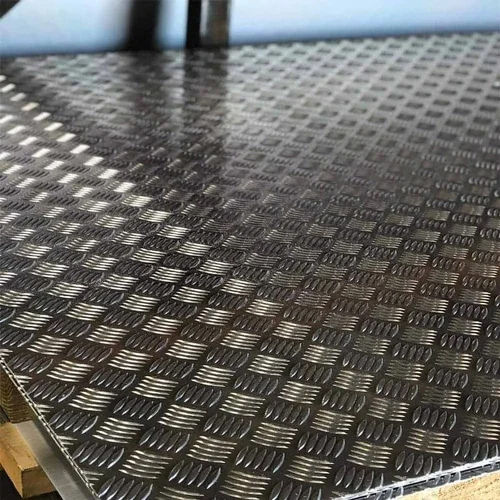
Stainless Steel Chequered Plates
Price 240 INR / Kilograms
Minimum Order Quantity : 200
Application : Other, Flooring, stair treads, ramps, walkways, industrial platforms, decorative and architectural applications
Thickness : 2mm to 10mm or customized
Surface : Chequered / Embossed
Color : Metallic Silver
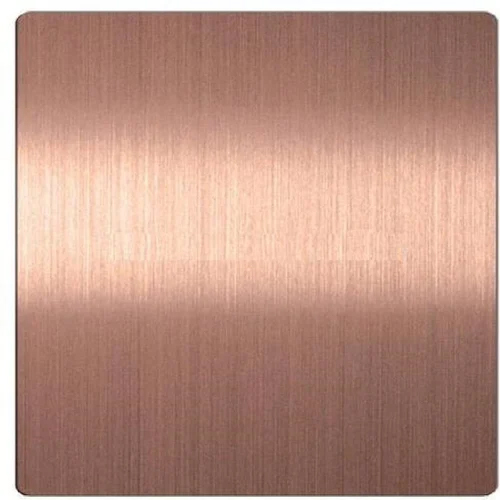
Stainless Steel Coloured Sheet
Price 3500 INR / Piece
Minimum Order Quantity : 200
Application : Other, Interior Decoration, Architectural Projects, Elevator Panels, Wall Cladding, Signage
Thickness : 0.5 mm 3.0 mm
Surface : Coloured, Polished, Mirror, Satin
Color : Gold, Rose Gold, Bronze, Black, Blue, Champagne, Custom colours available
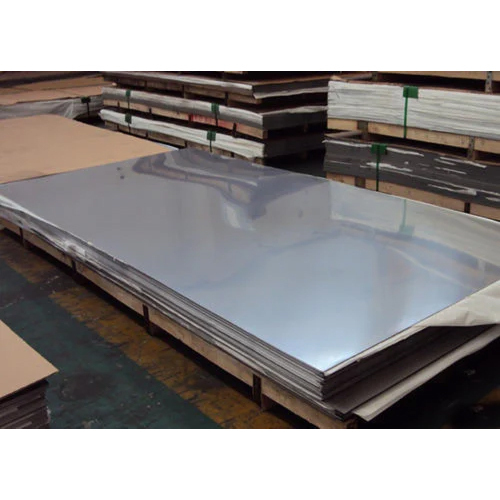
409 Stainless Steel Sheet
Price 80 INR / Kilograms
Minimum Order Quantity : 200
Application : Other, Automotive exhaust systems, heat exchangers, agricultural equipment, gas heaters, industrial machinery, construction
Thickness : 0.4 mm to 6 mm
Surface : 2B / BA / No.1 / Matte / Bright
Color : Silver / Metallic
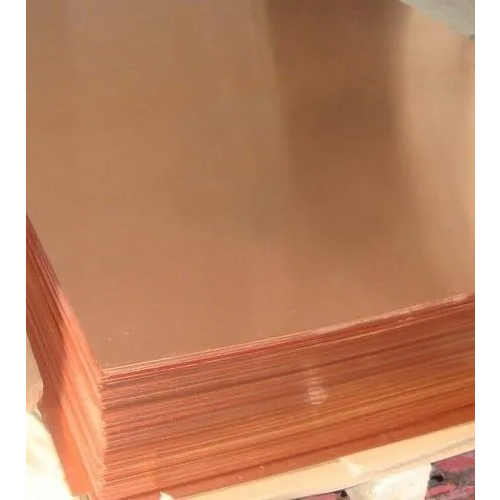
Copper Nickel Sheet
Price 800 INR / Kilograms
Minimum Order Quantity : 200
Application : Other, Marine engineering, Heat exchangers, Desalination plants, Power generation
Thickness : 0.5 mm to 50 mm
Surface : Smooth, Polished
Color : Metallic, Light Bronze

GST : 27AAPPS5635Q1ZM
 Send Inquiry



 |
PRAGATI METAL CORPORATION
All Rights Reserved.(Terms of Use) Developed and Managed by Infocom Network Private Limited. |
